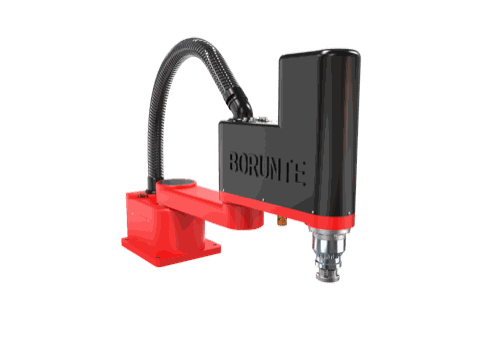
Sourcing a BRTIRSC0603A Four-Axis Robot for Small-Part Pick-and-Place and Machine Loading

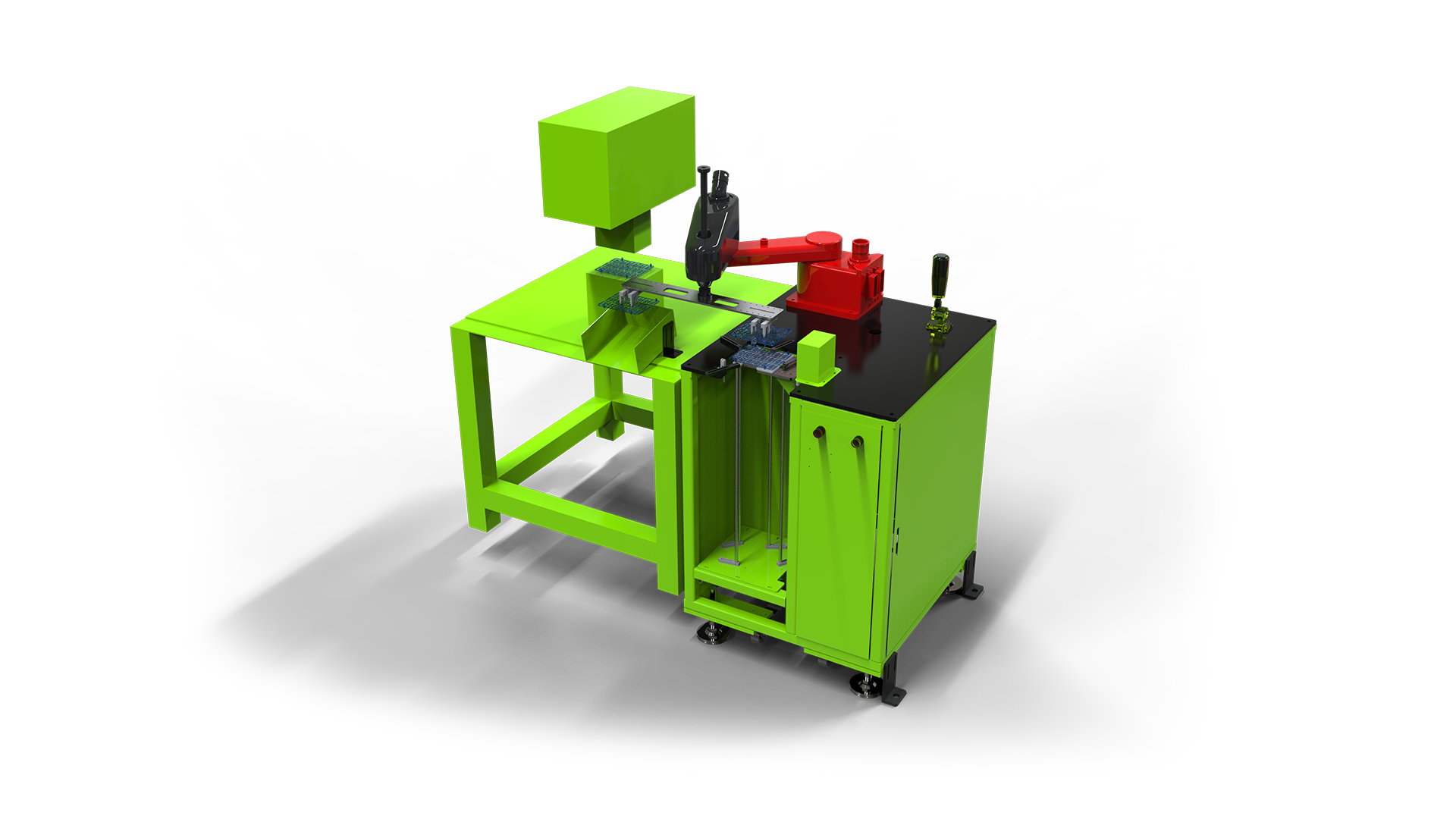
What this guide is for
If you are specifying a compact four-axis robot for a pick-and-place or machine-loading cell, the decision rarely comes down to one number. A 3 kg payload and a 600 mm reach sound simple until you put them next to a specific part, a specific machine, and a specific cycle time. This guide walks through the checks that actually determine whether the BRTIRSC0603A fits your application — and what to verify with an integrator before you place an order.
It is written for manufacturing engineers, automation integrators, and sourcing managers who already know the general shape of the cell they want to build and need to confirm the robot inside it.
The problem: small parts, tight cycles, and a machine that will not wait
Small-part pick-and-place and machine loading look like the easiest automation projects on a factory floor. They are usually not.
A machine-tending cell has a hard constraint the robot cannot negotiate with: the machine cycle. If the robot is still retracting when the chuck opens, the cell loses time on every single cycle, and the loss compounds across a shift. Meanwhile, the parts are light but often awkward — thin, flat, slippery, or slightly variable from the previous process.
Common symptoms engineers describe when a compact robot underperforms in this kind of cell:
- Grip instability — the part shifts or rotates in the gripper during acceleration.
- Vacuum loss — suction is established but not held through the move, or a thin sheet wrinkles under the cup.
- Double picks — two stacked blanks come up together and the second one is dropped at the wrong place.
- Placement offset — the part lands slightly off the fixture, and the next operation rejects it.
- Cycle creep — the cell works in testing, then falls behind the machine cycle in production.
None of these are usually robot faults. They are interface problems: the gripper, the part presentation, the fixture, and the motion profile are not matched to each other. That is why sourcing a compact four-axis robot is really a question of whether the cell fits, not just whether the arm fits.
Why automate this cell at all
Before comparing models, it is worth being clear about what the automation is buying you. For small-part handling and machine tending, the value usually comes from four places:
- Consistent quality — the same placement, the same grip force, the same insertion angle on every cycle, shift after shift.
- Repeatable production — output stops depending on who is on the station and how tired they are.
- Long-term cost reduction — one cell absorbing the work of a repetitive manual station, without the turnover and training cost that comes with it.
- Production flexibility — the same cell can often be re-tasked to a second part family with a gripper change and a program change, rather than a rebuild.
If the cell is not delivering at least two of those, it is worth re-examining the project before choosing a robot.
Where a compact four-axis robot fits — and where it does not
A four-axis robot is a specialist tool. It is extremely effective when the part needs to be picked, moved, and placed with a stable vertical orientation, and when the work is dominated by horizontal travel plus a vertical lift. That describes a large share of machine tending and small-part transfer work.
It is a poor fit when the task needs the tool to reorient the part in space — for example, presenting a face at an angle to a fixture, or following a curved path with a controlled tool attitude. Those tasks belong to a six-axis platform.
Being honest about this boundary early saves a lot of integration cost later.
Solution logic: what an integrated cell actually looks like
A working pick-and-place or machine-loading cell is a system, not a robot. In practice, the integration work sits in four layers:
- Part presentation — how the blank arrives at the pick point, and how consistently it is located there.
- End-of-arm tooling — vacuum cups, grippers, or a hybrid, matched to part weight, surface, and stiffness.
- Robot and controller — the arm, its mounting, its motion profile, and how it talks to the machine and the safety system.
- Machine and fixture interface — the signals that tell the robot the machine is ready, and the fixture that receives the part.
YGT Robot works as an integrator and application provider on this layer — selecting the appropriate robot platform for the application and delivering the gripper, fixture, control, and programming work around it. The robot itself is a BORUNTE platform; the cell is what gets engineered.
Key selection factors for the BRTIRSC0603A
The BRTIRSC0603A is a compact four-axis robot from the BORUNTE range. The confirmed specifications below are the ones that drive most sourcing decisions in small-part handling and machine tending.
| Factor | BRTIRSC0603A | Why it matters in a pick-and-place / machine-tending cell |
|---|---|---|
| Axes | 4 | Suits pick-move-place and machine loading with a stable part orientation; not suited to tasks needing full tool reorientation |
| Payload | 3 kg | Must cover the part plus the end-of-arm tooling. A 1.2 kg gripper leaves roughly 1.8 kg for the part — plan the margin, do not use it all |
| Arm reach | 600 mm | Defines the working envelope. Check the worst-case pick and place points, not the average |
| Repeatability | ±0.02 mm | Relevant for insertion, seating, and tight fixture fits; less critical for loose drop-in placement |
| Robot weight | Approx. 28 kg | Affects mounting structure, pedestal design, and how easily the cell can be relocated |
| Power capacity | 5.62 kVA | Feeds into panel sizing and site power planning |
| CE certification | Yes — conformity verified under 2006/42/EC (machinery) and 2014/35/EU (low voltage) | Relevant for EU-bound projects and for internal compliance documentation |
| Explosion-proof | Not available on this model | If the cell handles flammable atmospheres, this model is out of scope — only the BRTIRSE2013F carries explosion-proof certification in the range |
| Declared applications | Handling, machine loading/unloading, palletizing, spraying, welding | Confirms the platform is used across these application families |
How to read the payload number
The 3 kg payload is a total figure: part + gripper + any vacuum manifold, sensor, or cabling carried on the flange. A typical vacuum end-effector for small flat parts can weigh 0.8–1.5 kg on its own. That leaves a working part weight in the region of 1.5–2.2 kg — comfortable for most small-part handling, tight for anything heavier.
If your part is close to that ceiling, the honest answer is to weigh the actual end-effector before committing, not to assume the margin.
How to read the reach number
The 600 mm reach is measured from the robot's mounting point, not from the edge of the cell. The real question is whether the farthest pick point and the farthest place point both fall inside the envelope with margin for the gripper and part. A common mistake is to size the robot against the average position and then discover the outermost fixture is just out of range.
Cycle time: what actually determines it
Cycle time in a pick-and-place cell is rarely limited by the robot's rated speed. It is usually limited by:
- Travel distance — the straight-line distance between pick and place, plus the vertical lift.
- Acceleration limits — how fast the arm can accelerate without the part shifting in the gripper.
- Grip and release time — vacuum build-up and release, or gripper open/close.
- Machine handshake — how long the controller waits for the machine-ready signal.
- Settling time — how long the arm needs to stop vibrating before the part is released accurately.
For a machine-tending cell, the target is straightforward: the robot's total handling time must sit comfortably inside the machine cycle, with margin for variation. If the handling time is equal to the machine cycle, the cell will run behind in production even if it looks fine in testing.
Fixture and interface checks
This is where most compact-robot projects are won or lost. Before specifying the robot, confirm:
- Part presentation — is the incoming part located to a repeatable position, or does it need vision or a locating fixture first?
- Gripper type — vacuum for flat, non-porous parts; mechanical gripper for parts with features to grip, or where vacuum cannot be established reliably.
- Part surface — porous, oily, or textured surfaces affect vacuum performance; thin sheet can wrinkle under suction.
- Fixture clearance — can the gripper reach into the fixture without the arm body fouling the machine enclosure?
- Machine signals — what interface does the machine expose (dry contact, fieldbus, other), and does the cell controller match it?
- Safety — how the cell is guarded, and how the robot's safety circuit integrates with the machine's.
These are integration questions, not catalogue questions. They are also the reason a robot that looks correct on paper can still fail on the floor.
Application scope: what is confirmed, and what needs checking
For the BRTIRSC0603A, the confirmed application families are handling, machine loading/unloading, palletizing, spraying, and welding.
Applications such as deburring, grinding, polishing, dispensing, vision-based sorting, laser cutting, and assembly are not confirmed for this model. That does not mean they are impossible — it means they require an engineering review against the actual process, part, and tooling before anyone commits to them. If your application falls into that group, the right next step is a technical conversation, not an assumption.
YGT Robot's role in this kind of cell
YGT Robot (Guangdong Yigaite Intelligent Technology Co., Ltd.) works as an automation integrator and application provider. In a compact pick-and-place or machine-tending project, that means:
- Reviewing the part, the machine, and the cycle requirement together, rather than starting from a robot model.
- Selecting the appropriate robot platform for the application — the BRTIRSC0603A is one option among several, and not always the right one.
- Designing and delivering the end-of-arm tooling, fixture, and part-presentation approach.
- Handling the control integration between robot, machine, and safety system.
- Commissioning on site and supporting the cell in production.
The distinction matters: the robot is a platform, and the cell is the deliverable. Sourcing decisions that treat those as the same thing tend to produce cells that work in the integrator's workshop and struggle in the factory.
FAQ
Q: Can the BRTIRSC0603A handle a 3 kg part? A: The 3 kg figure is the total payload at the flange — it includes the gripper, vacuum manifold, sensors, and any cabling. In practice, a small-part vacuum end-effector often weighs 0.8–1.5 kg, leaving roughly 1.5–2.2 kg for the part itself. If your part is near the upper end, confirm the actual end-effector weight before specifying.
Q: Is 600 mm reach enough for a machine-tending cell? A: It depends on the distance from the robot mounting point to the farthest pick and place positions, with margin for the gripper and part. Measure the worst-case positions, not the average. If the outermost fixture sits close to the envelope edge, consider a longer-reach model in the range.
Q: What cycle time can I expect? A: Cycle time is driven by travel distance, acceleration limits, grip/release time, machine handshake, and settling time — not by a single rated speed figure. The practical target for machine tending is that total handling time sits comfortably inside the machine cycle, with margin for variation.
Q: Can I use vacuum grippers on this robot? A: Yes — vacuum end-effectors are common for flat, non-porous small parts. Whether vacuum works reliably for your specific part depends on surface porosity, oil, texture, and part stiffness. Thin sheet in particular can wrinkle under suction and may need a different presentation or gripper approach.
Q: Does the BRTIRSC0603A support deburring, polishing, or assembly? A: Those applications are not confirmed for this model. They require an engineering review against the specific process, part, and tooling. Contact YGT Robot's engineering team to assess feasibility for your application.
Q: Is the BRTIRSC0603A available with explosion-proof certification? A: No. Only the BRTIRSE2013F carries explosion-proof certification in this range. If your cell operates in a flammable atmosphere, this model is out of scope.
Q: Does it carry CE certification? A: Yes — conformity has been verified under 2006/42/EC (machinery) and 2014/35/EU (low voltage). Relevant for EU-bound projects and internal compliance documentation.
Q: What should I check before ordering? A: Confirm four things: worst-case reach envelope, actual end-effector weight against the 3 kg payload, whether total handling time fits inside the machine cycle, and the fixture and machine signal interfaces. These four checks resolve most of the risk in a compact pick-and-place or machine-tending project.
Next step
If you are evaluating the BRTIRSC0603A for a specific cell, the most useful thing you can bring to the conversation is the part, the machine, and the cycle requirement. From there, YGT Robot's engineering team can confirm whether this platform fits, or recommend an alternative from the range.
Published by the YGT Engineering Team · YGT Robot · Guangdong Yigaite Intelligent Technology Co., Ltd. · ygtrobot.com